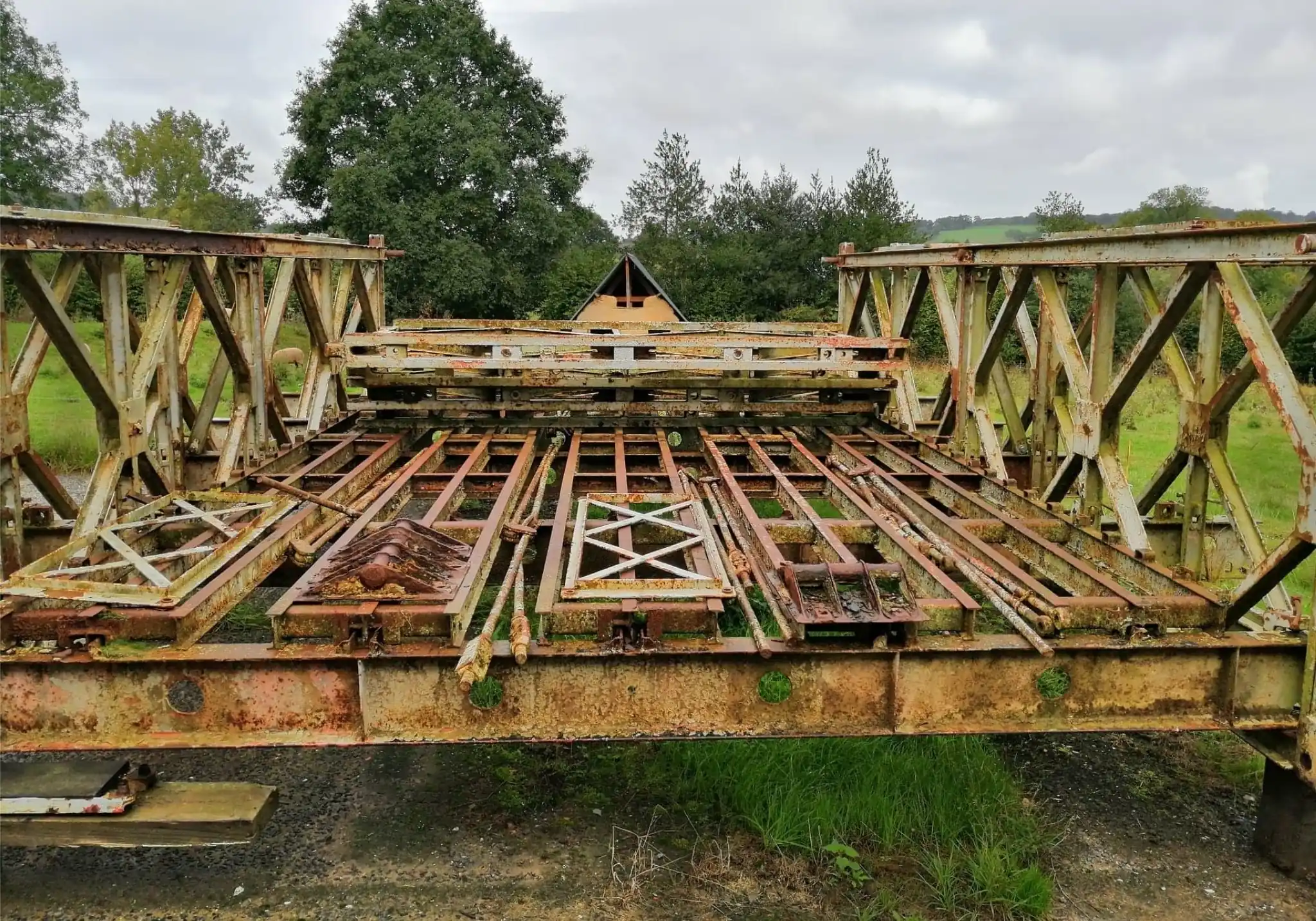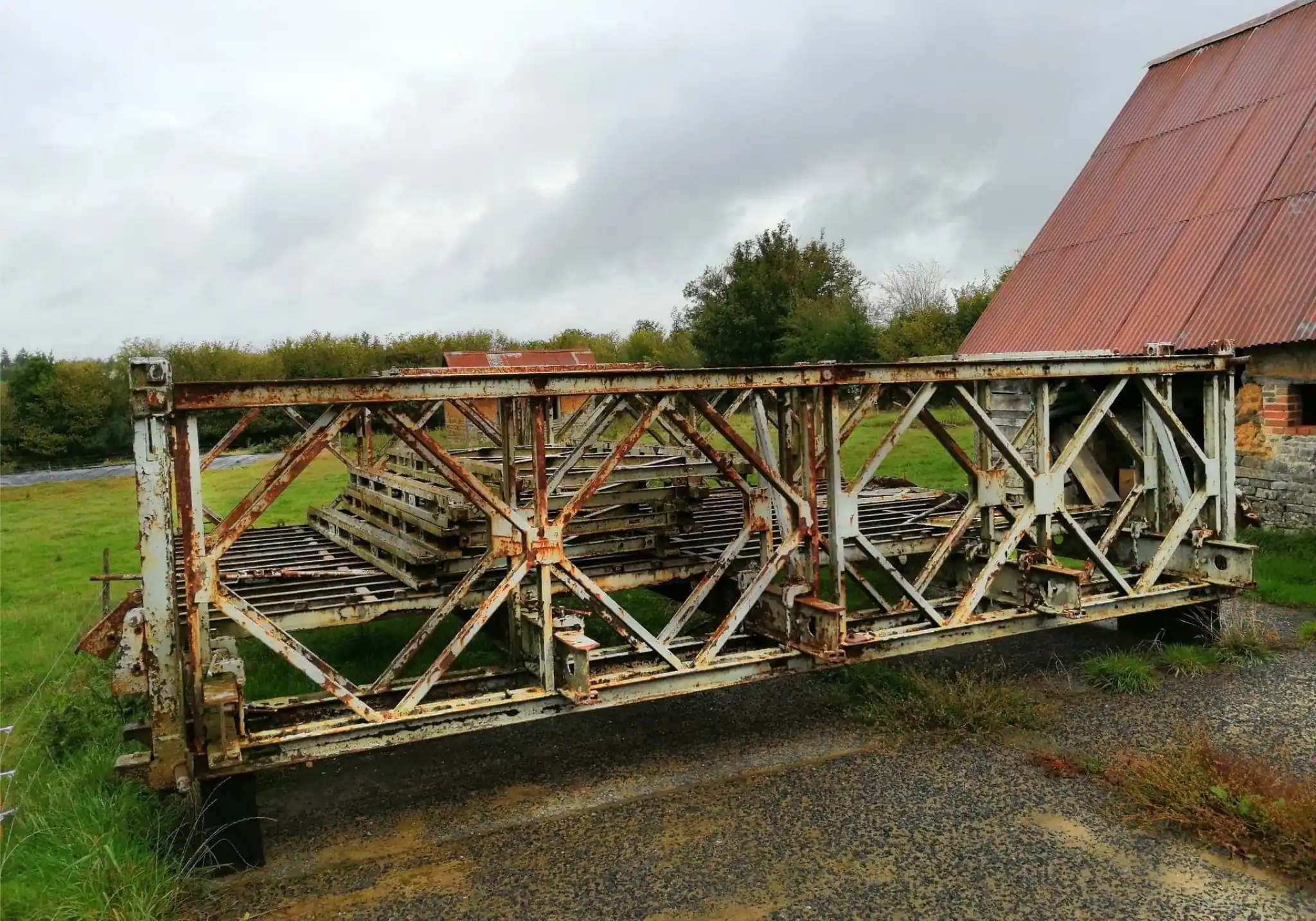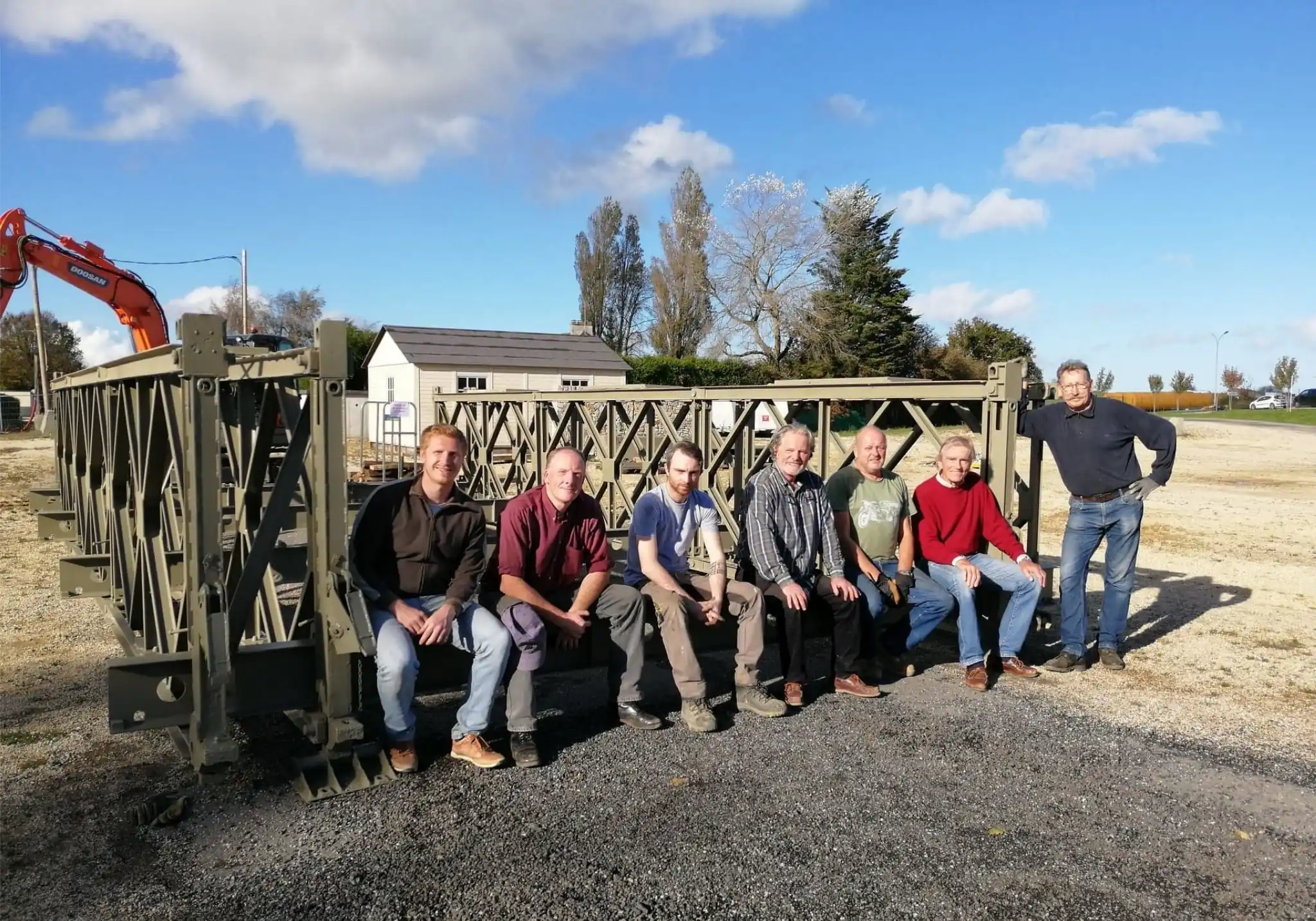
A genuine Bailey bridge installed at Normandy Victory Museum
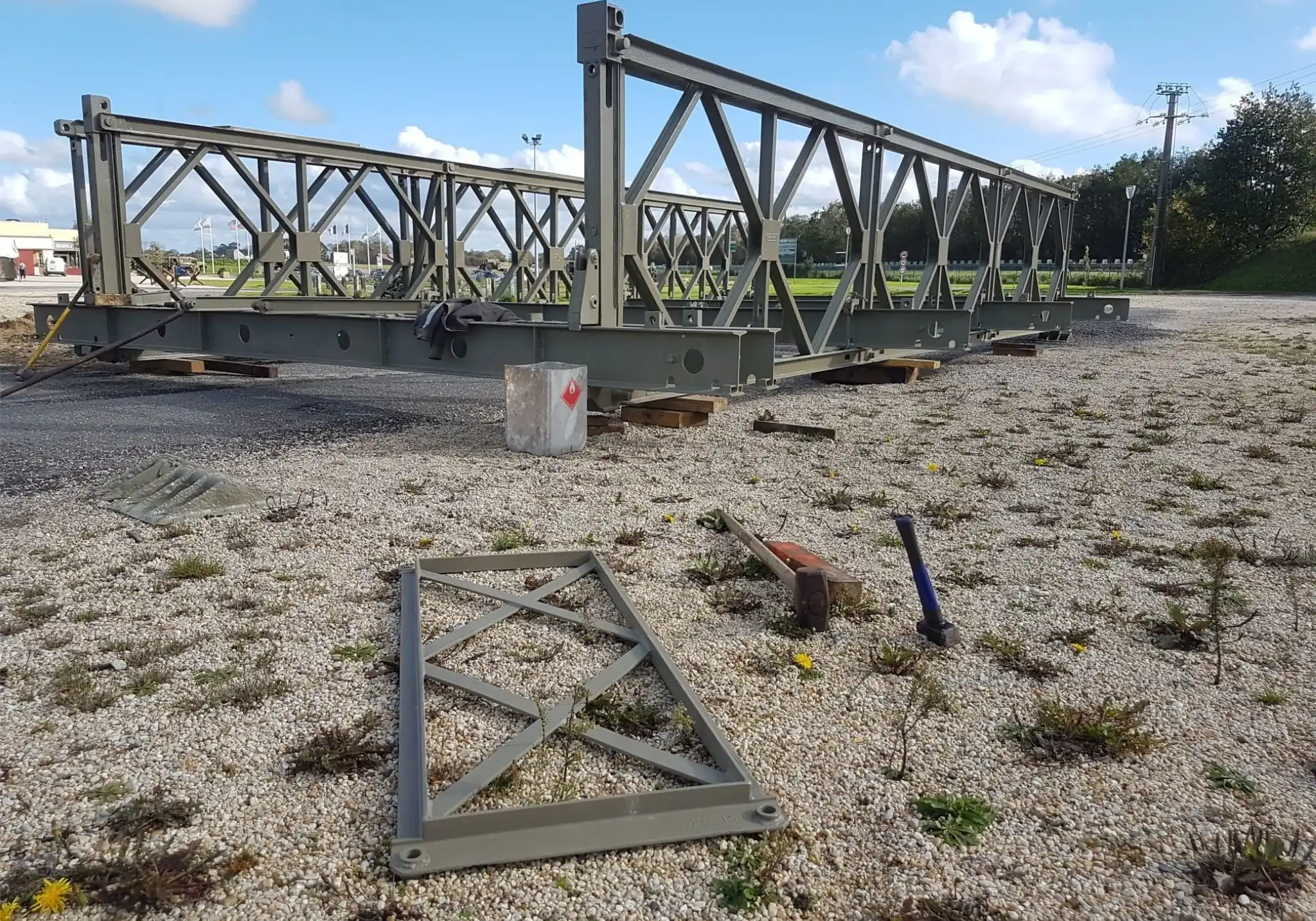
In 2019, the museum had the opportunity to acquire a genuine Bailey bridge. After several stages of restoration, it was installed on the grounds of the Normandy Victory Museum or the public can view it there for free.

Months of renovation before the museum's unveiling to visitors
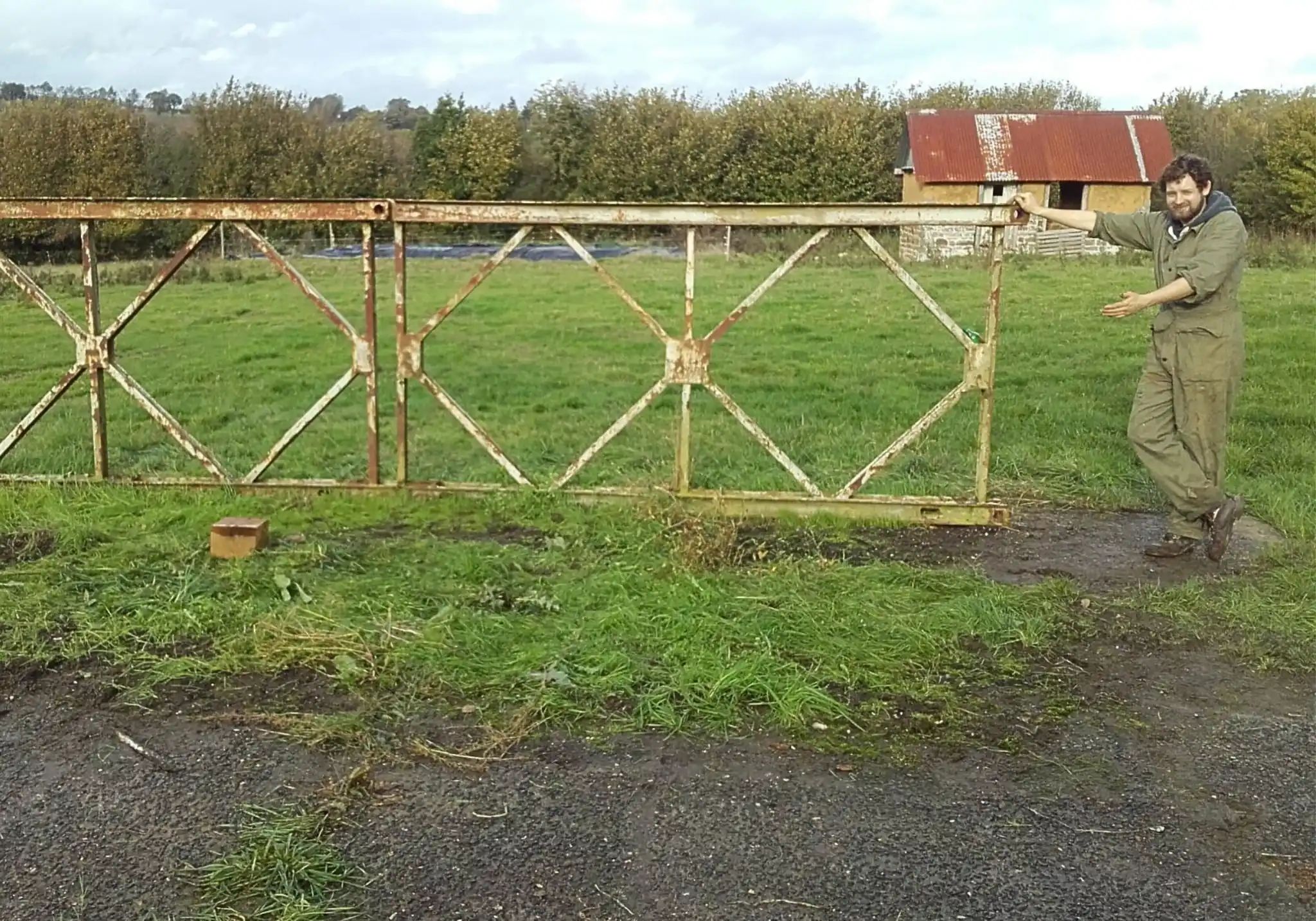
It was in Pont-Farcy, with Christopher Long, president of the association Les amis du Pont Bailey, that the team of Normandy Victory Museum, traveled there in 2019 to acquire this impressive collector's item.
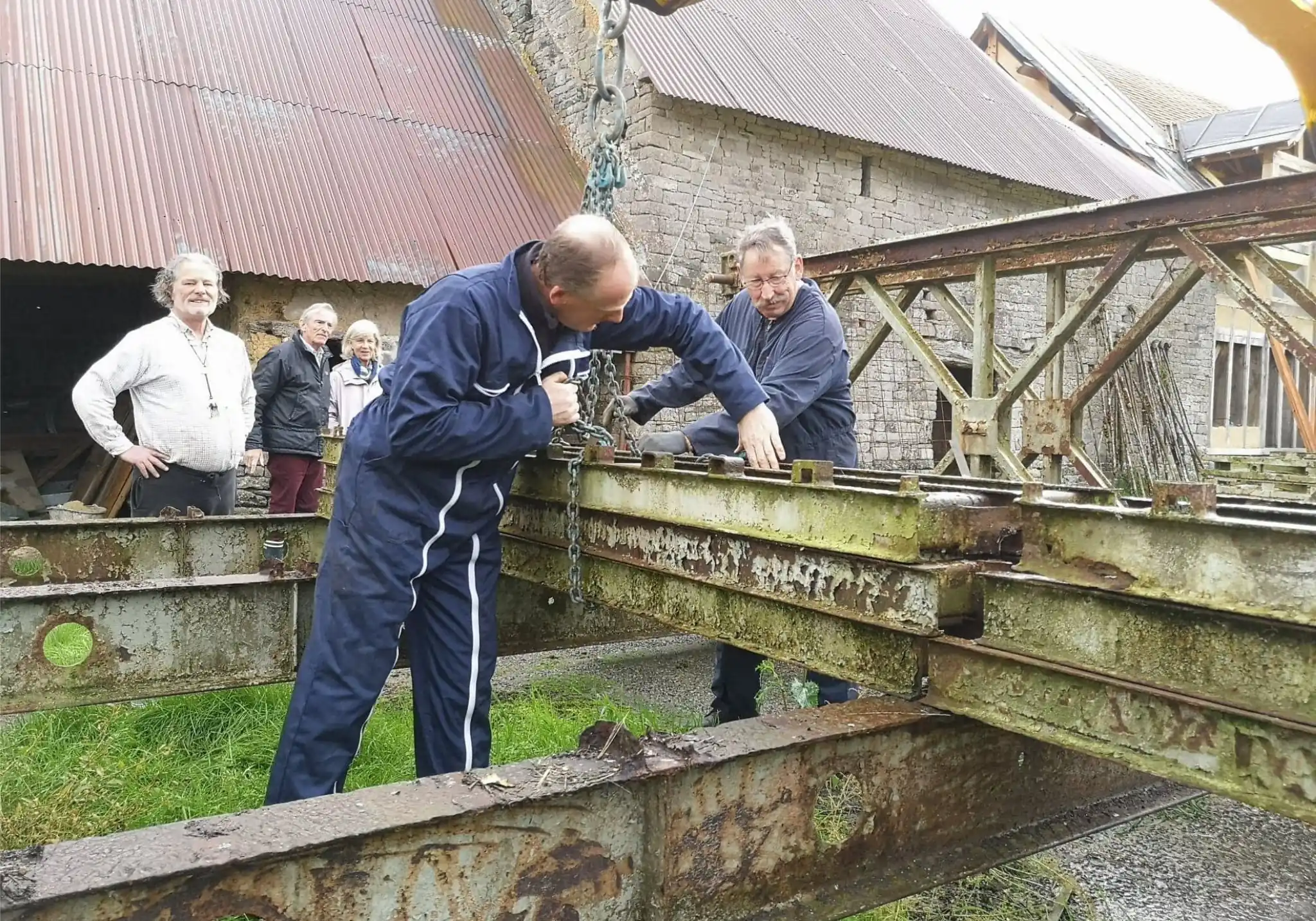
Over time, the bridge had become badly damaged by rust. Several renovation operations were necessary, including sandblasting, priming, rustproofing, and painting, to make it presentable again.
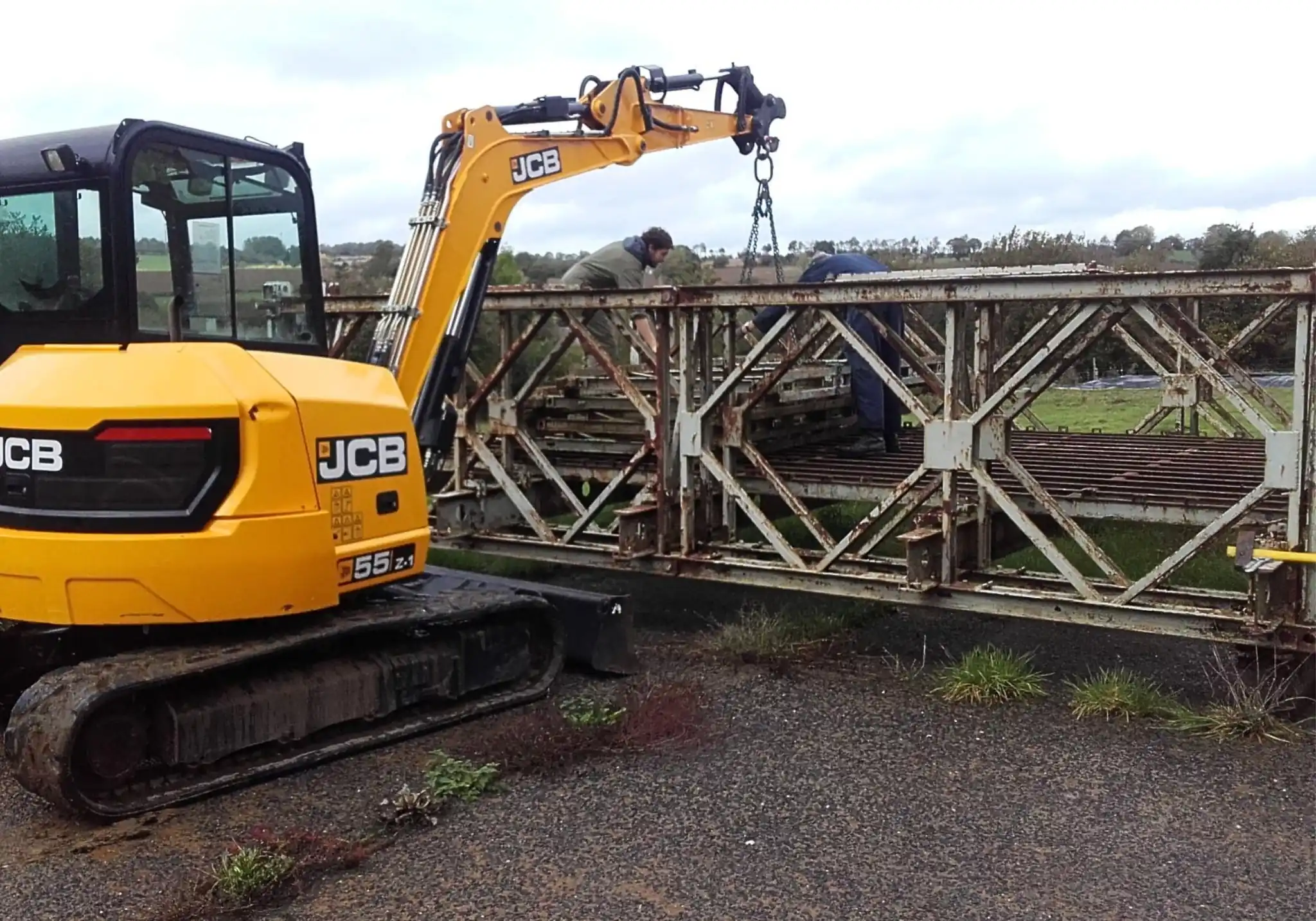
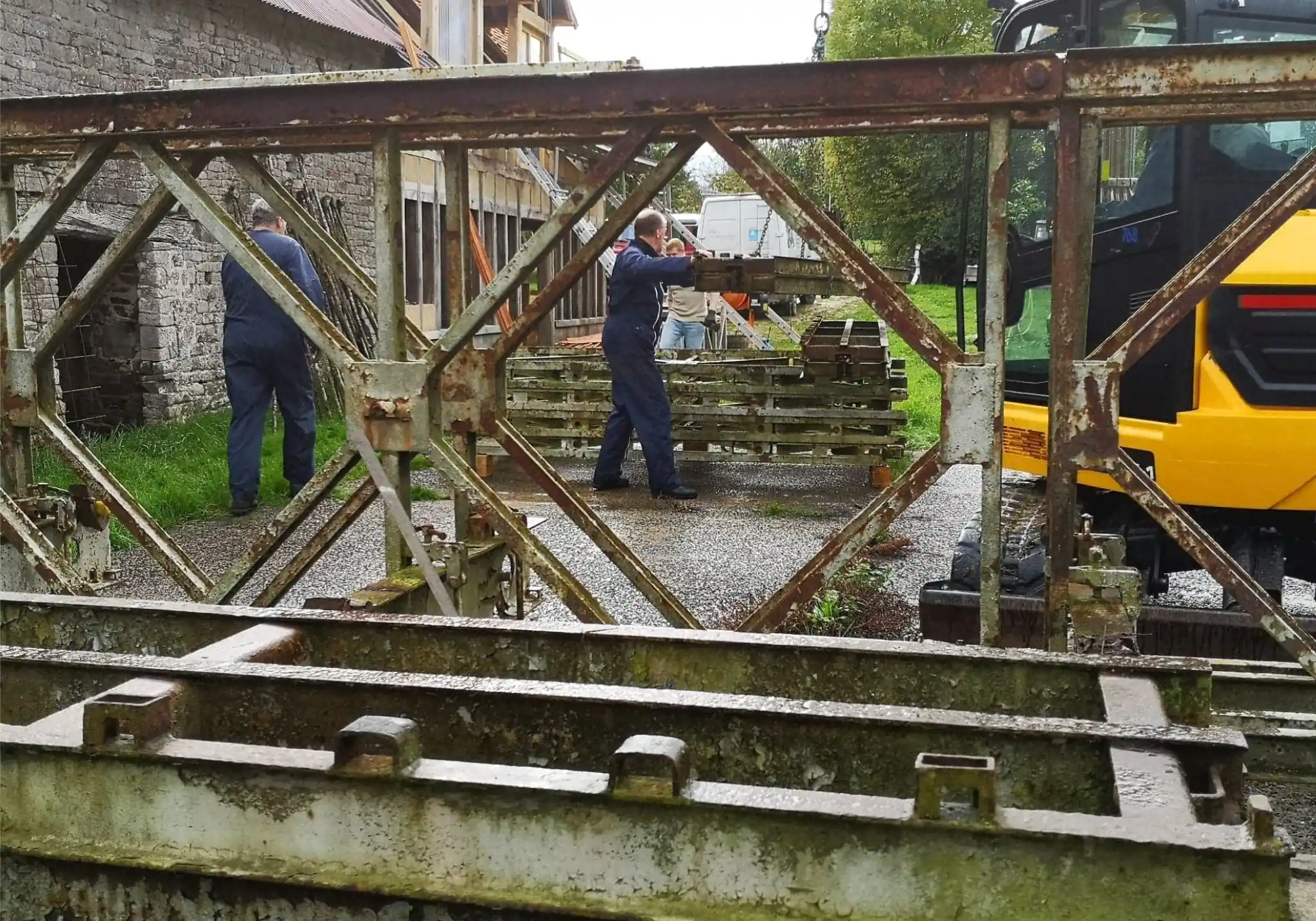
Next came the transport from Pont-Farcy, in the Orne to Carentan, then a long day of reassembly and finally, in October 2021, the Bailey bridge was visible to our visitors.
This nine-meter-long structure, composed of three complete sections of a real bridge, is accessible free of charge, outside the museum along with several other remains and vehicles.
What is a “Bailey Bridge”?
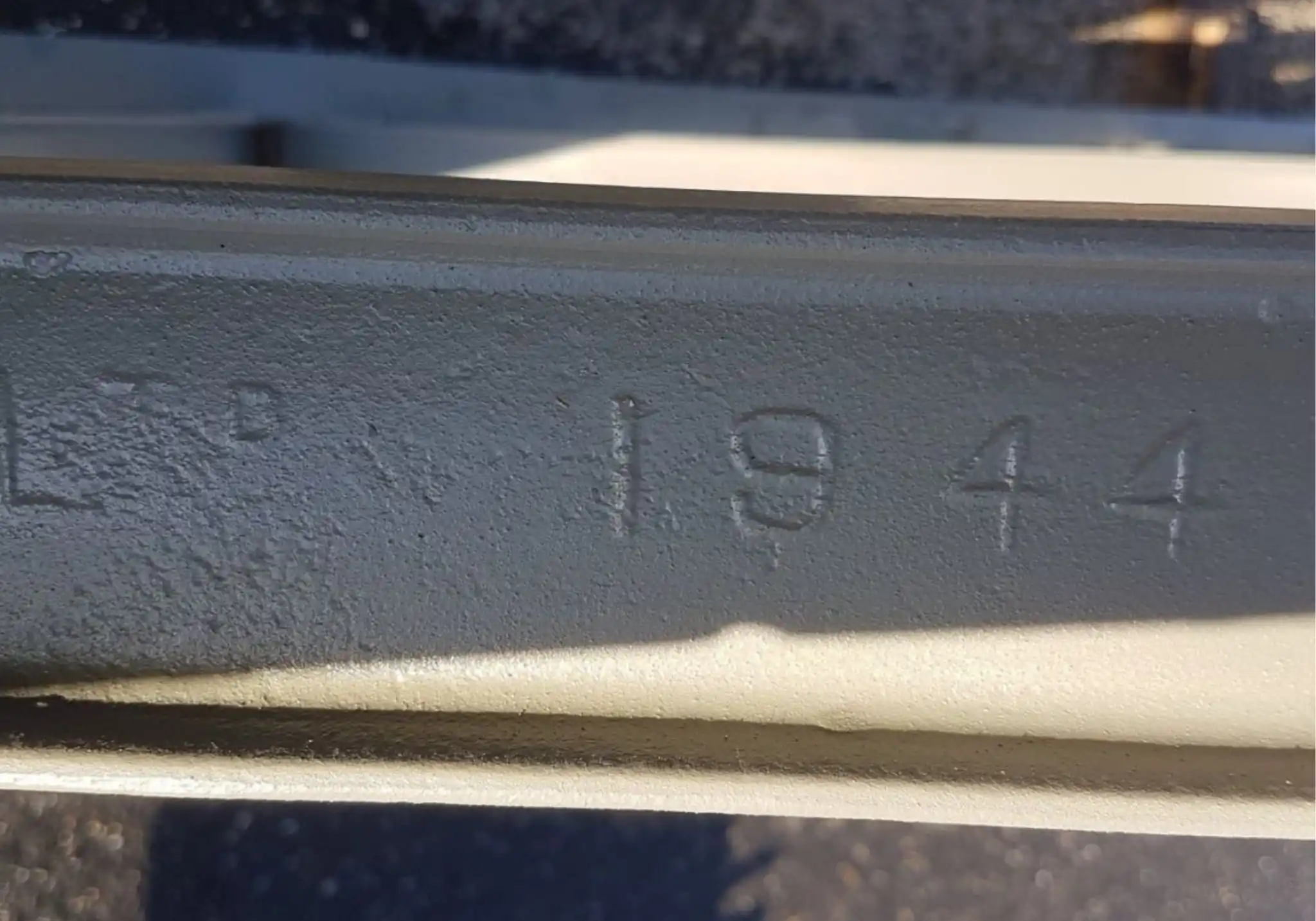
Invented and patented in 1941 by the English engineer Donald Bailey, the bridge of the same name was deployed on the field of operations from November 1942 and proved to be a major asset in the advance of the Allied troops, in particular thanks to its simple assembly principle which did not necessarily require mechanical strength (the heaviest element could be carried by only six men).
Widely used in Normandy and essential to the breakthrough in the Cotentin Peninsula, it is a formidable relic of the battle. General Eisenhower considered the Bailey bridge to be one of the three revolutionary weapons of the conflict, along with radar and the heavy bomber.
Engineer Bailey, for his part, was knighted by the British Crown in recognition of his groundbreaking invention.

Two Bailey bridges during World War II | Photo Signal Corps US Army - Public Domain
The Bailey Bridge restoration project, in pictures