
Operation Cobra: A decisive breakthrough in the Battle of Normandy
The summer of 1944 saw one of the most decisive American offensives of World War II unfold in Normandy. After weeks of grueling fighting in the hedgerows, Allied troops launched a large-scale operation to break through German lines and open the road to Brittany and Paris. This offensive has a name that has become famous: Operation Cobra.
In this article, we explain how it helped change the course of the Battle of Normandy.
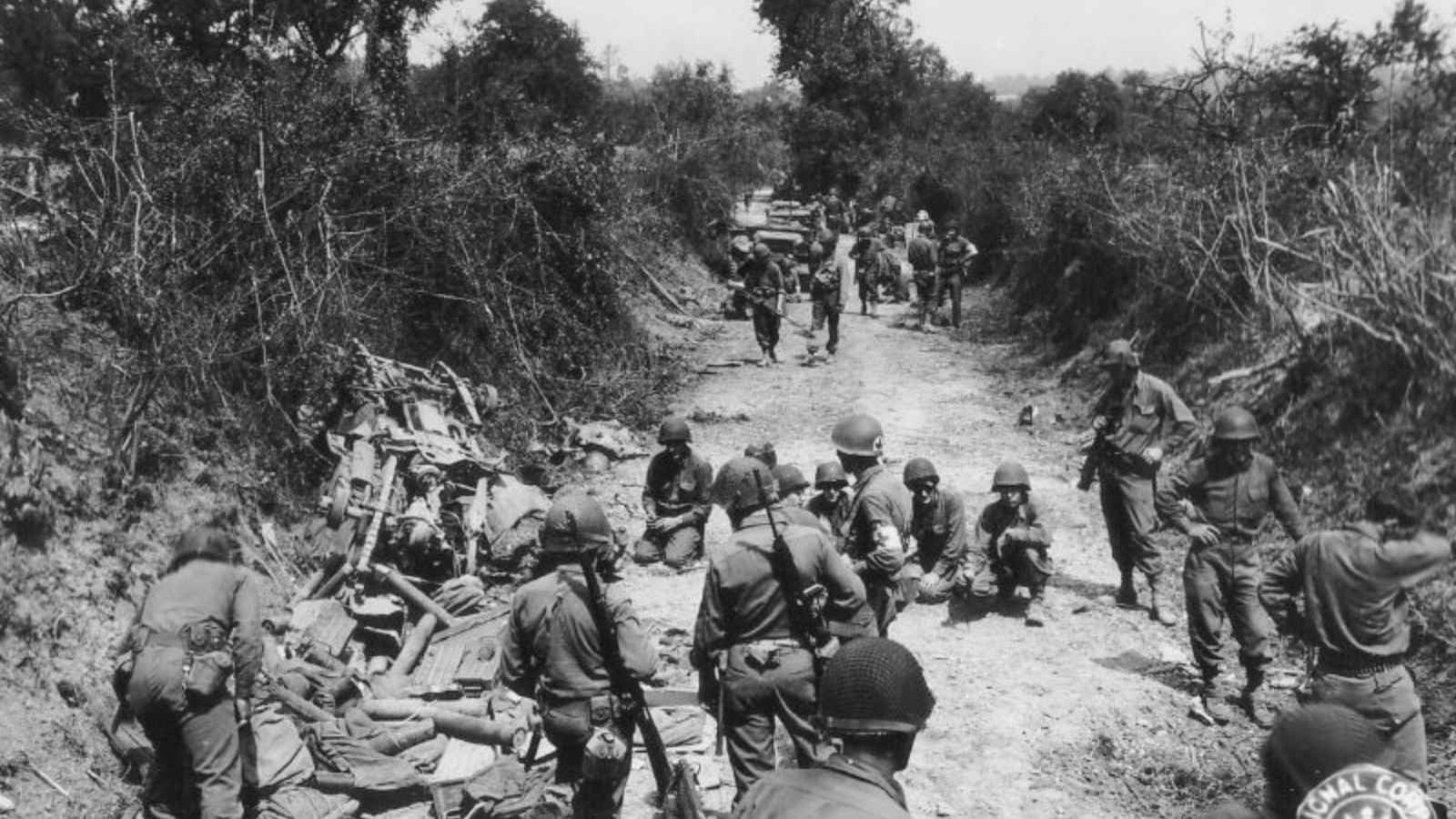
Cobra, a daring operation to break through the German front
On June 6, 1944, Allied troops landed on the beaches of Normandy, marking the beginning of the liberation of occupied Europe. In the days that followed, their forces established a strong beachhead and gradually advanced inland.
Faced with this offensive, German reinforcements rapidly poured in from Brittany, the Loire Valley, and southern France to contain the Allied advance. Field Marshal Rommel managed to bring experienced divisions such as the 2nd SS Panzer Division "Das Reich," the Panzer Lehr Division, and seasoned paratroopers from the... to Normandy. Fallschirmjäger-Regiment 6.
It was then that the American soldiers discovered an unexpected enemy: the Norman bocage. These thick hedges bordering each field, set atop high embankments, became a natural defensive network where the German army entrenched itself. Mortars, machine guns, and snipers were concealed within them, transforming every meter advanced into close combat. The GIs soon dubbed these clashes “Hedgerow Hell.”
At Montgardon, near La Haye-du-Puits, the 79th Infantry Division was losing a man every three meters. Along the entire front between La Haye-du-Puits and Lessay, it was estimated that one American soldier was killed for every meter gained. One of them, exhausted, noted in his diary: "This war could last ten years..."
Faced with this stalemate, the American high command devised a daring operation to break through the German front, breach this fortress of hedgerows, and open the road to Brittany and Paris. Its code name: Operation Cobra.
A monumental preparation
To break the stalemate in the Norman bocage, the American high command conceived Operation Cobra as a lightning offensive. Its principle: to launch a massive aerial bombardment (Massive Blow) on a narrow front, annihilate all resistance, and open the way for armored divisions.
Originally scheduled for July 18, 1944, Operation Cobra was delayed due to bad weather. Finally, on July 25, at 9:40 a.m., what would be called the largest carpet bombing operation of World War II began. More than 1,500 heavy bombers, supported by a thousand medium bombers and fighter-bombers, dropped nearly 4,000 tons of bombs on an area of approximately 12 km², averaging 5,000 bombs per km², between Montreuil-sur-Lozon and Hébécrevon, south of Saint-Lô.
The villages of La Chapelle-en-Juger and Hébécrevon were literally wiped off the map. While the military objective was achieved, the price paid was heavy for the population: in a few days, thousands of Norman civilians lost their lives, buried under the rubble of their homes or killed during their escape.
This incredibly violent bombardment disrupted the German defenses and created a lunar landscape of craters and ruins. Operation Cobra could then truly begin, opening a decisive breach in the German front, but at the cost of civilian lives wiped out by the onslaught of Allied fire.
The Americans are preparing for the assault
After the massive bombing of July 25, 1944, American forces rushed forward to exploit the breach opened by Operation Cobra. The VII Corps, commanded by General Lawton Collins, deployed six divisions on a front of only eight kilometers:
The 9th and 30th Infantry Divisions were to break through the enemy lines, later supported by the 1st Infantry Division, before the tanks of the 2nd (Hell on Wheels) and 3rd (Spearhead) Armored Divisions poured through the breach. To the west, General Troy Middleton's VIII Corps was poised to exploit the breakthrough toward Brittany.
Opposite them, exhausted Germans
After a month and a half of relentless fighting, their units were severely tested. The Panzer Lehr Division, an elite unit, was virtually destroyed by the bombing. The 2nd SS Panzer Division “Das Reich”, the 17th SS Panzergrenadier Division “Götz von Berlichingen”, and the 5th Fallschirmjäger-The division, although battle-hardened, now has only a few tanks and decimated personnel. Reinforcements are arriving only sporadically and cannot reverse the trend.
Their defense remains fierce, but faced with such firepower and the methodical organization of Cobra, the balance quickly shifts in favor of the Americans, who prepare to rush towards Coutances and Avranches, opening the road to Brittany and precipitating the German rout.
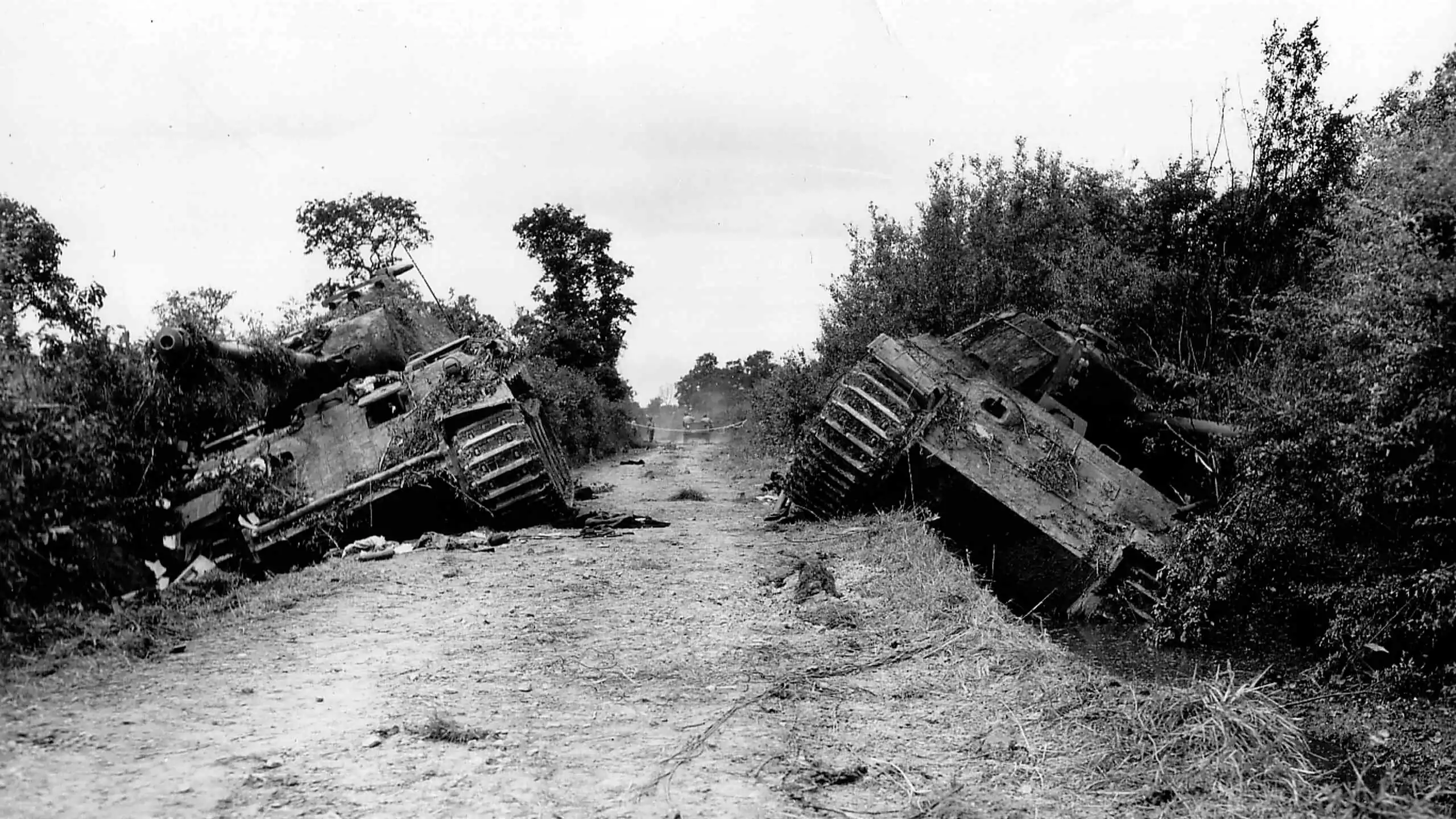
Two destroyed Panzer V tanks belonging to the 1st Company of the 130th Panzer Lehr Regiment lie on the roadside. Photo: US Archives | Normandy Regional Council
The decisive advance towards Avranches
Between July 25 and 30, the breakthrough widened. Villages fell one after another. Marigny, Saint-Gilles, and Canisy were taken by American armored divisions. The final objective was achieved when Avranches was captured, thus opening the road to Brittany and making it possible to consider encircling the German forces still present in Normandy.
This breakthrough marks a major strategic turning point. American troops are finally leaving the Norman bocage to find terrain more favorable to the use of their superiority in armored vehicles and air power.
The Hedge Cutter: the secret weapon against hedges
To overcome the obstacle of the hedgerows, the American army relied on an ingenious invention: the hedge cutter. Designed by Sergeant Curtis Culin, this device was made from metal beams salvaged from the D-Day beaches. Welded to the front of Sherman tanks, it transformed these armored vehicles into veritable "Rhino tanks," capable of smashing through hedgerows rather than attempting to cross them.
Deployed just before Operation Cobra, these equipped Shermans gave the Americans a decisive advantage. Thanks to them, the infantry and armored vehicles advanced more quickly, paving the way for the breakthrough that would end the hell of the hedgerows.

Hedge cutter in action during the hedgerow wars. Photo Signal Corps - US Archives via Normandy Regional Council
A heavy price paid for freedom
Operation Cobra, although it enabled a decisive strategic victory, had a particularly high human cost.
Between July 25 and 31, 1944, the American divisions involved lost nearly 5,000 soldiers killed and more than 13,000 wounded or missing, for a total of about 18,000 men out of action.
German losses were also considerable. The single Panzer Lehr Division was virtually annihilated, losing more than half its personnel and almost all of its armored vehicles. Across the entire front, it is estimated that 12 000 German soldiers killed during Operation Cobra, plus 28,000 prisoners captured by the Allies in July 1944.
For the people of Normandy, liberation also came at a heavy price. The bombings and fighting of Operation Cobra caused the deaths of several thousand civilians, while the entire Battle of Normandy claimed the lives of more than 20,000 Normans. Entire villages, such as La Chapelle-en-Juger, were razed under the carpet of bombs, leaving families shattered and communities devastated.
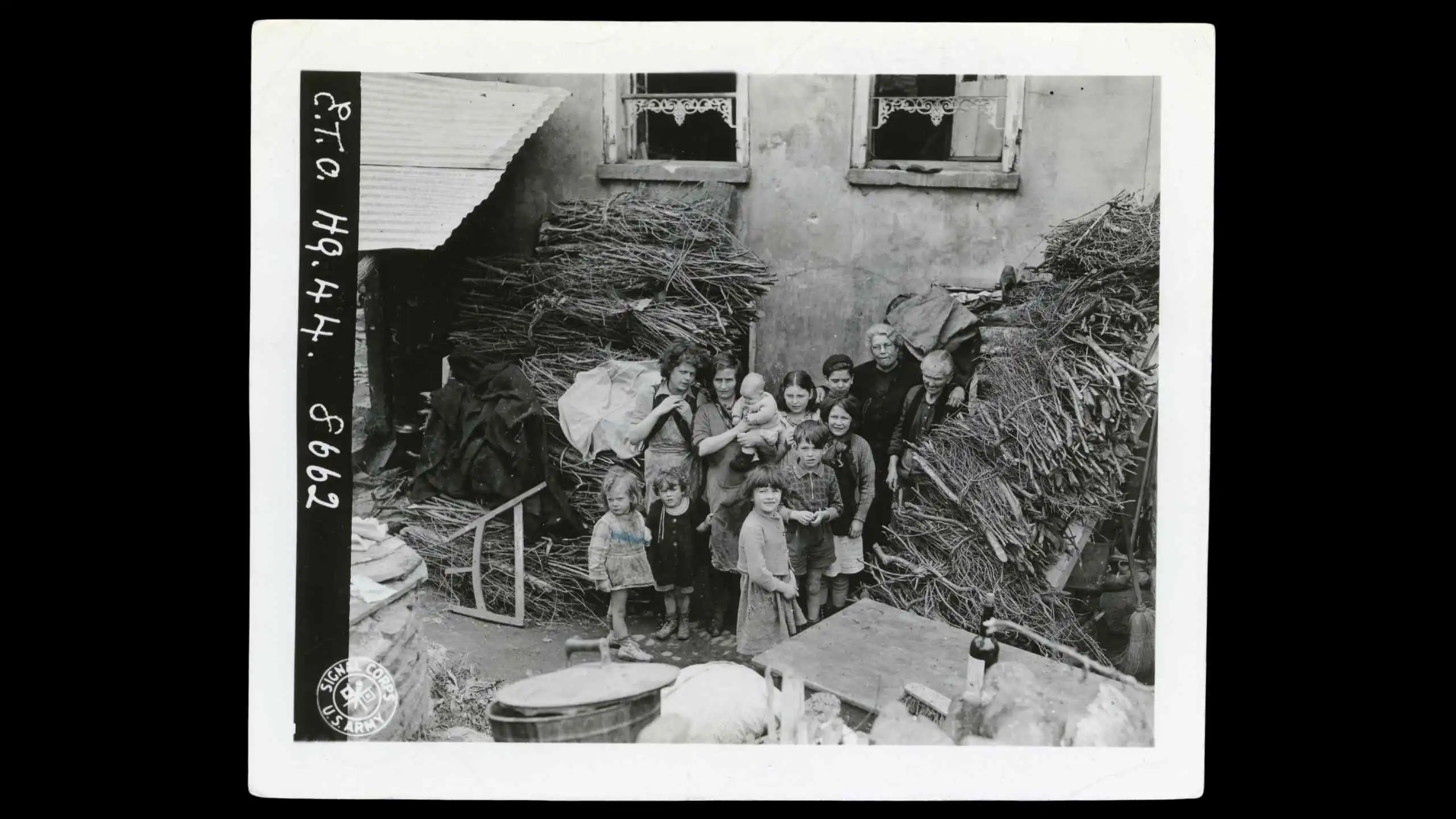
Women and children emerge from their underground shelter in Saint-Lô, France. Photo Signal Corps - US Archives
Cobra, the operation that changed the course of the war
Operation Cobra marked a major turning point in the Battle of Normandy. It put an end to the hell of the hedgerows, allowed American troops to leave the bocage and open the road to Avranches, towards Brittany and then Paris.
Thanks to this breakthrough, the Allies were able to fully exploit their superiority in mobility and air power. The war of attrition gave way to a war of movement, leading to the rapid collapse of the German lines. Without Cobra, the liberation of France would undoubtedly have been delayed by several weeks, or even several months.
But this victory came at a price. Behind the strategic maneuvers and the figures, Cobra remains above all the story of thousands of soldiers who fell for freedom, and of Norman civilians caught in a deluge of fire they will never forget.
Today, traveling the roads of the bocage countryside, it's hard to imagine the scale of these battles. And yet, every hedgerow, every embankment, every village still bears the memory of this decisive operation. It is to pass on this memory that our museum exists, so that these stories – those of the soldiers as well as those of the civilians – continue to be told to future generations.
To remember
- Operation Cobra, launched on July 25, 1944, enabled American troops to break through the German front in Normandy.
- This offensive put an end to the hell of the hedgerows, opening the road to Avranches, Brittany and Paris.
- More than 20,000 soldiers and civilians lost their lives during these decisive battles of the summer of 1944.