
Women in war
In every country, they rolled up their sleeves and, in addition to their domestic roles, performed important tasks in industry, agriculture, healthcare, the military, the Resistance… Women demonstrated unparalleled courage during the Second World War, and yet they were “sent back to their homes” as soon as the war ended. It took many years for their role to be recognized, and it is still sometimes minimized. Normandy Victory Museum highlights all these courageous women, from the smallest details of their daily lives to the historical destinies of some, in a permanent thematic exhibition.
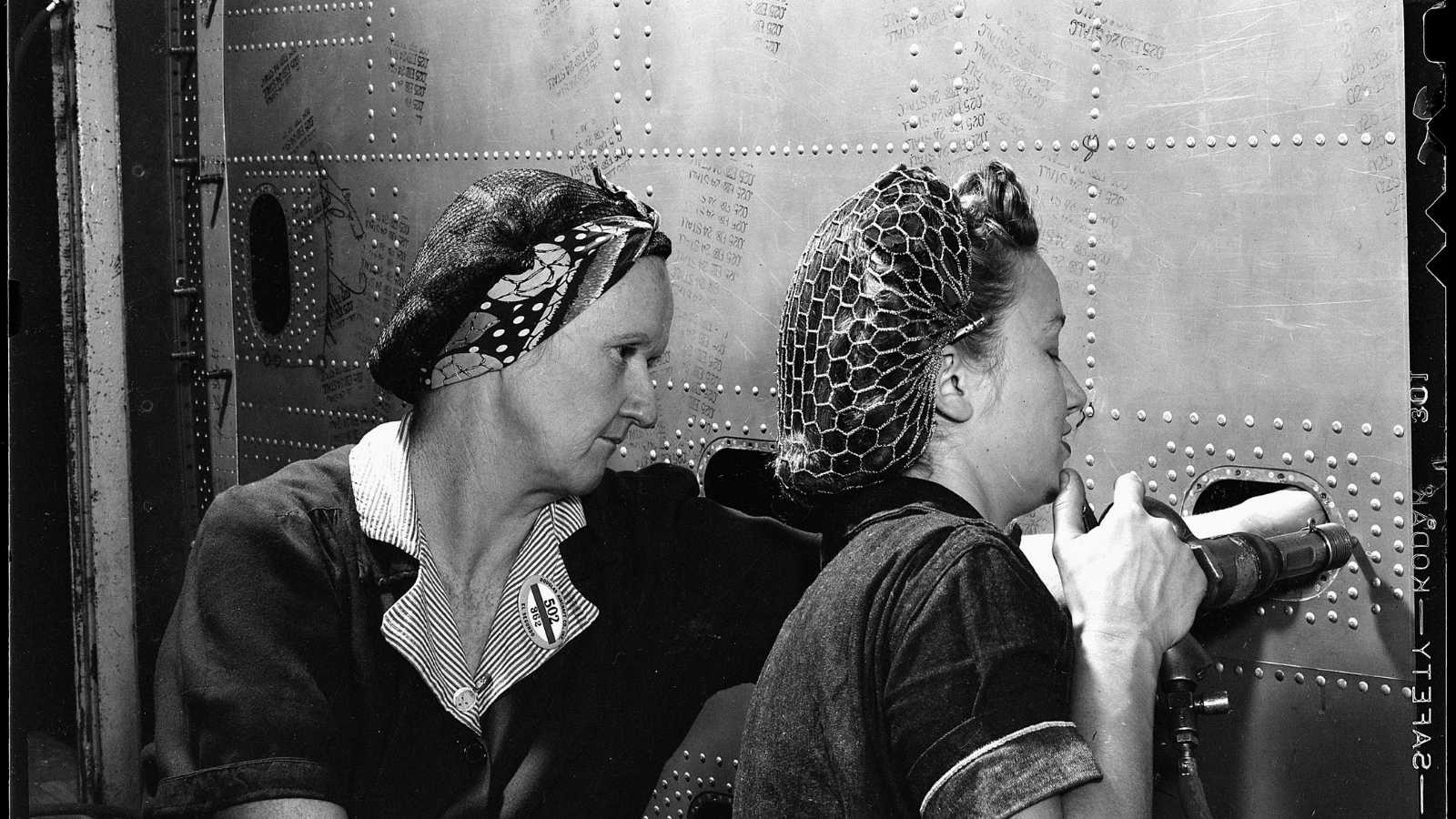
Inside the Douglas Aircraft factory in El Segundo, California, riveting workers are working on a wing panel of an SBD (Scout Bomber Douglas).
1939, women roll up their sleeves
History, with a capital "H," has long excluded women in general. This goes hand in hand with the society in which we have long evolved, a society that is gradually transforming. Systematically associated with maintaining the home and raising children, the woman of the late 1930s seemed to have only a domestic role to play. Yet, with the announcement of war and the general mobilization of men for the front in 1939, it was the women who rolled up their sleeves to allow life to continue as normally as possible.
A tribute to those who fought
Just like the men, these women fought for their freedom and the freedom of their country. This new permanent exhibition thus serves as a tribute to those who, with the utmost courage, took the place of men and proved to everyone that women have their place outside the home. The ambition to restore to women the visibility they have long been denied will be the driving force of the exhibition. It will also, and above all, be an opportunity to take a different look at the Second World War, that of those who, for so long, were considered only the collateral victims of a war waged by men.
Divided into several themes, the exhibition brings together photographs, archival images, uniforms and various objects that tell the story of the women who also suffered during this war.
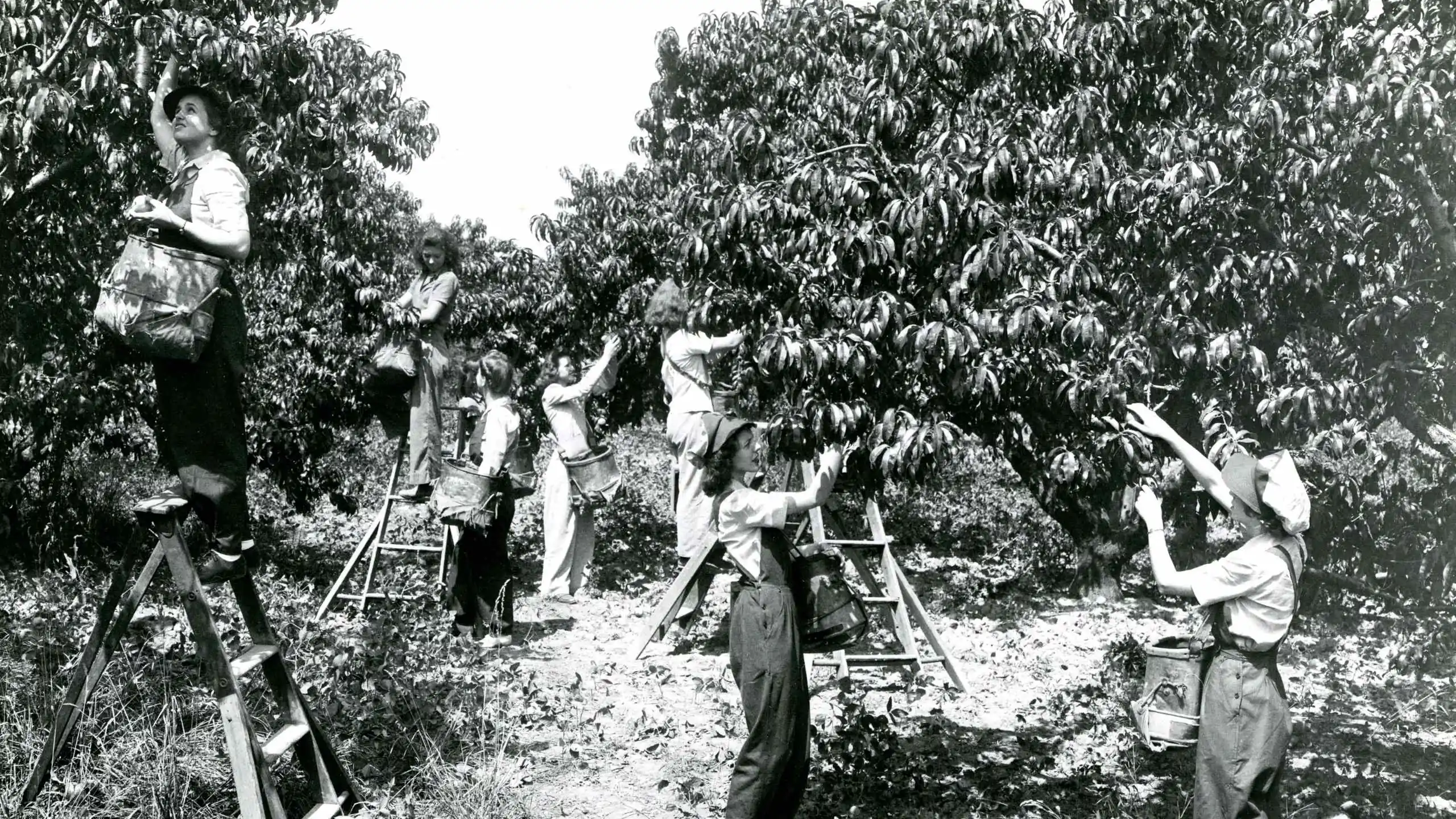
Members of the Women's Land Army during World War II, wearing regulation capes, shirts, and overalls, harvest peaches in August 1944. The three women in the foreground are (from left to right): Frances Hickman, Lillian Dewdney, and Nancy Dick. Photographer: Madeleine Osborne (USDA)
At home, in production, in the fields…
A large proportion of women will be forced to continue taking care of their homes and children in an occupied France subject to rationing.
However, in times of total war, the mobilization of all available forces is necessary. Factory and field production, previously the domain of men, passes into the hands of women who, through sheer physical strength, take over the jobs of those who go to the front.
Supporting the war effort, increasing the usual production of factories and farms, this is what the new daily life of women looks like.
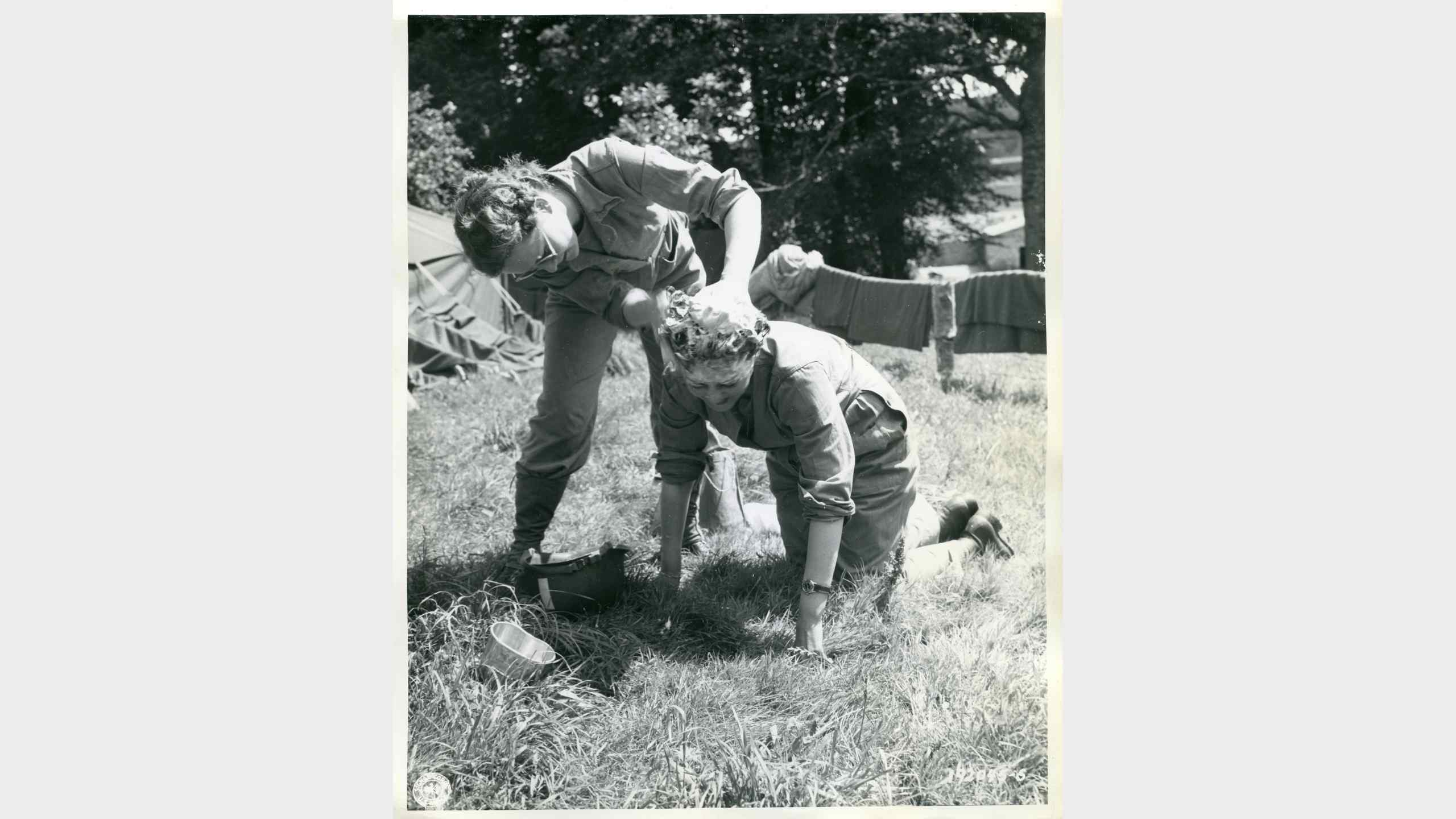
Two WACs in Normandy undertake the difficult task of washing their hair inside steel helmets. From left to right: soldiers Clare Dickman (San Francisco) and Selma Herfort (New York).
Women are also at the heart of the struggles
Some will turn to the Resistance, finding there a way to become even more involved in the fight for freedom. Others will don the uniform, enlisting in the various auxiliary services of the armed forces reserved for women. The British, American, and Canadian armies will indeed establish auxiliary services reserved for women, linked to each branch of the national armed forces: army, air force, and navy. Nursing positions will also be in high demand. Furthermore, you will discover that one of the countries involved in the conflict will even go so far as to authorize female soldiers.
These women, each in their own way, played a part in the Second World War. They paved the way for future generations and contributed to profound changes in society. The right to vote granted to French women in 1944 is one of the first examples of this.
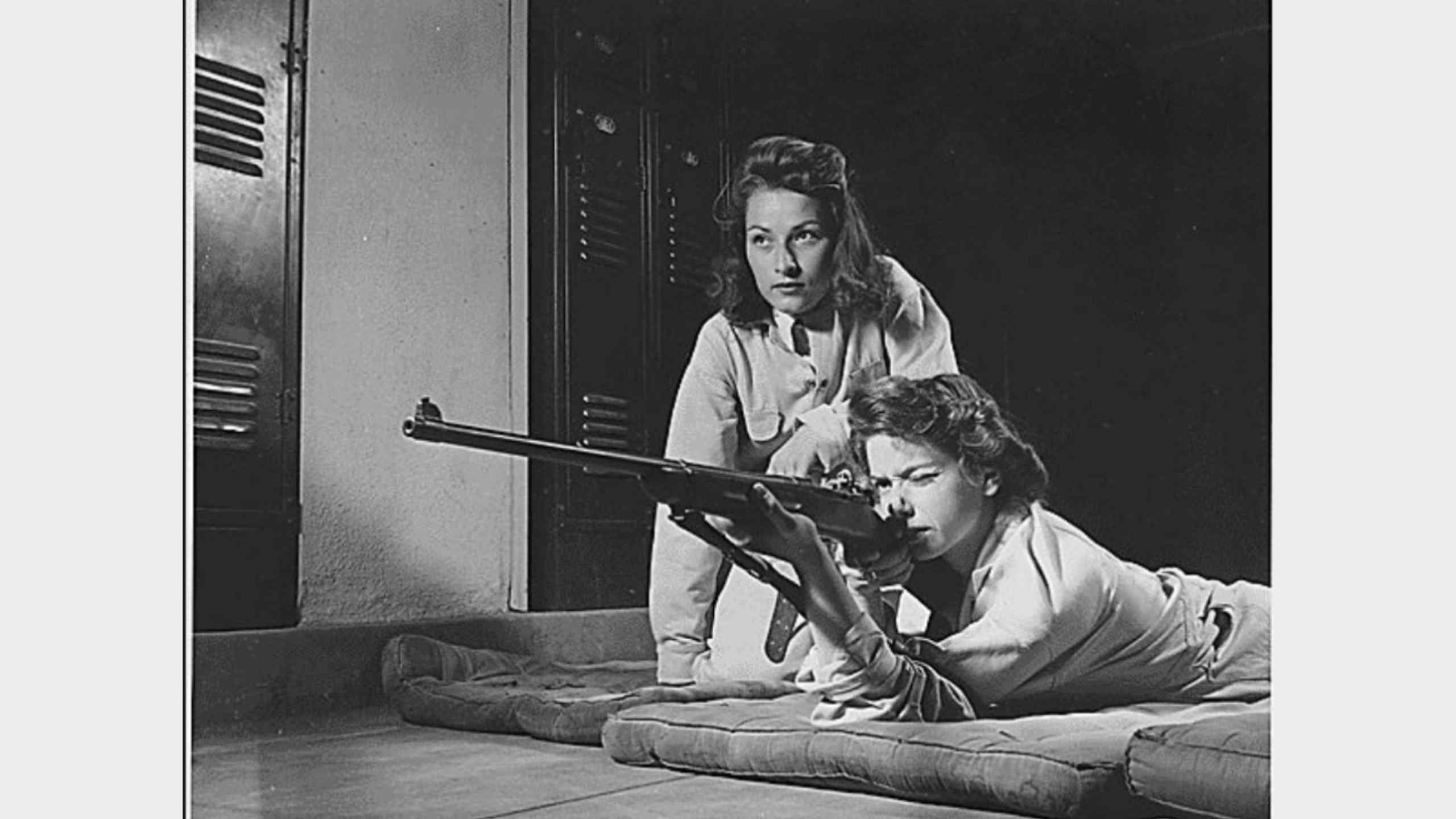
Shooting training helps the young women at Roosevelt High School in Los Angeles, California, to become responsible women. As part of the Victory Corps activities, shooting practice encourages them to handle weapons accurately.
Long overshadowed by traditional military narratives, these women nevertheless contributed to the war effort in numerous ways. Their commitment, courage, and resilience left a lasting mark on postwar societies. Through its permanent exhibition "Women in War," the Normandy Victory Museum invites us to rediscover these often overlooked journeys and to take a different look at the Second World War.
To remember
- From 1939 onwards, women took an essential place in the economy, agriculture and services in order to maintain the functioning of the country despite the mobilization of men.
- Some actively engaged in the Resistance, the auxiliary services of the Allied armies or the care of the wounded, participating directly in the war effort.
- Long minimized, the role of women during the Second World War is now recognized as a major element in the history of the conflict and the evolution of society.