
The Battle of the Hedgerows
After the D-Day landings on June 6, 1944, fighting continued in the Normandy bocage. For several weeks, the hedgerows became the scene of a particularly difficult and deadly battle for both Allied and German soldiers.
At the heart of this war of attrition, the Battle of the Hedgerows played a major role in the advance of American troops through Normandy and profoundly marked the history of the territory around Carentan.
At Normandy Victory Museum,, this period occupies a central place in the visitor experience through immersive scenes, authentic objects and testimonies related to the battles of the Norman bocage.
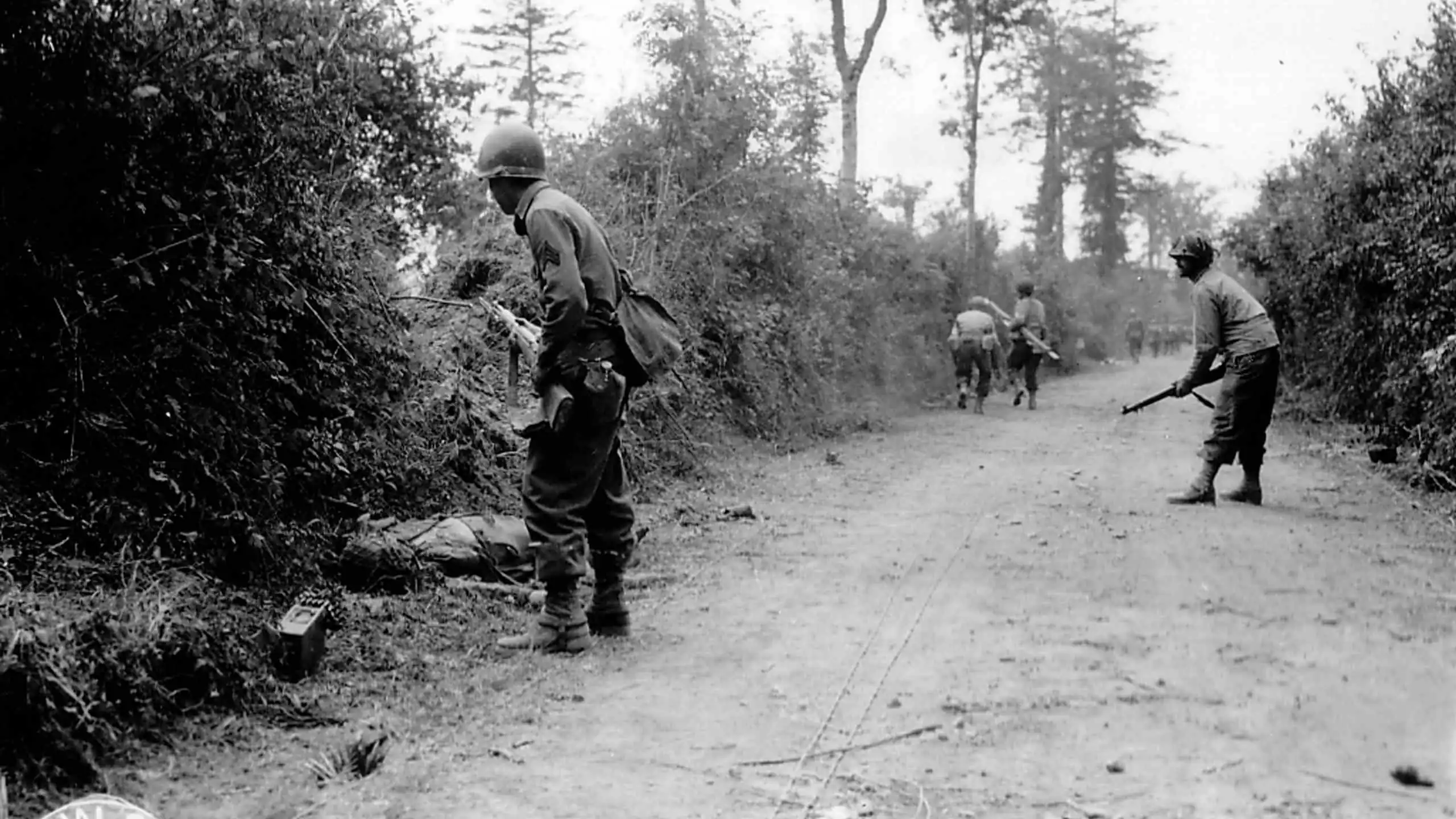
After D-Day, one of the greatest battles in history.
The night of June 5-6 marked the final hours of the Occupation of Normandy. Numerous American paratroopers jumped onto the Cotentin Peninsula, targeting the towns of Carentan and Sainte-Mère-Église. Their role was to clear the way for American infantry and armored vehicles by securing key locations. American units jumped into the darkness toward their mission, while a few hours later, troops freshly landed by sea on Utah Beach linked up with them. By the evening of June 6, the beaches were American, despite heavy losses.
The war then entered a second phase, which consisted of capturing the town of Carentan to secure the link between the Utah and Omaha Beach beachheads. Eisenhower then intended to cut the Cotentin Peninsula in two to isolate the Cherbourg region. The Allies needed a strategic port as quickly as possible to facilitate the landing of their reinforcements and supplies.
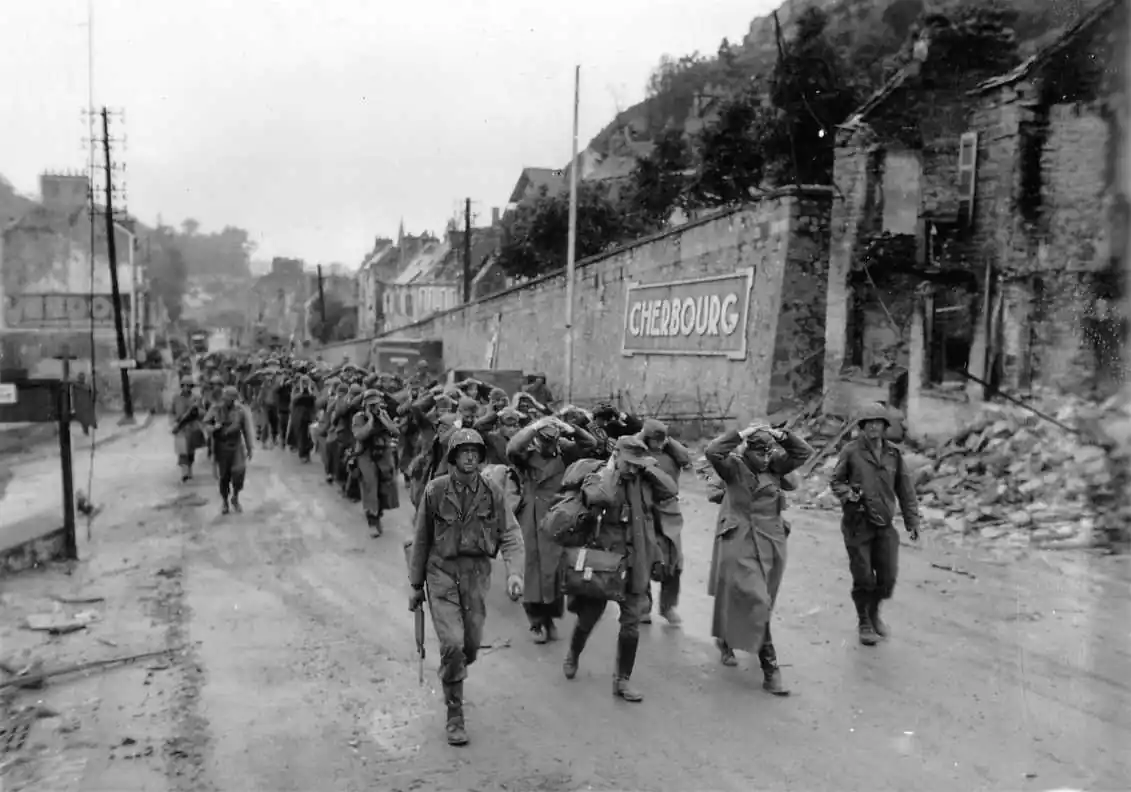
On June 18, 1944, the capture of Barneville-Carteret isolated the Cotentin Peninsula and allowed the Allies to consider taking Cherbourg. The naval port fell to the Americans a week later. The Battle of the Hedgerows, also known as the "War of the Hedgerows," then began, one of the longest and most costly ordeals for the American troops.
Carentan, a key objective of the landing
Eisenhower always considered Carentan the primary objective of the D-Day landings on June 6, 1944. Consequently, the General Staff committed maximum resources and elite troops to the battle for the town, a crucial logistical hub. The American assaults of the 101st Airborne Division on Carentan began on June 10.
Two days later, the German army was forced to abandon the town. On June 12, Carentan was liberated, but the very next day, the German paratroopers holding the town attempted to retake it with the support of recently arrived SS armored units. The assault ultimately failed, thanks to the tenacity of the American paratroopers, reinforced by the armored reinforcements.
The capture of Carentan allowed the American army to consolidate its positions and establish a line of defense in order to advance inland. After the capture of Carentan, the American army refocused its attention on its primary objective: Cherbourg.
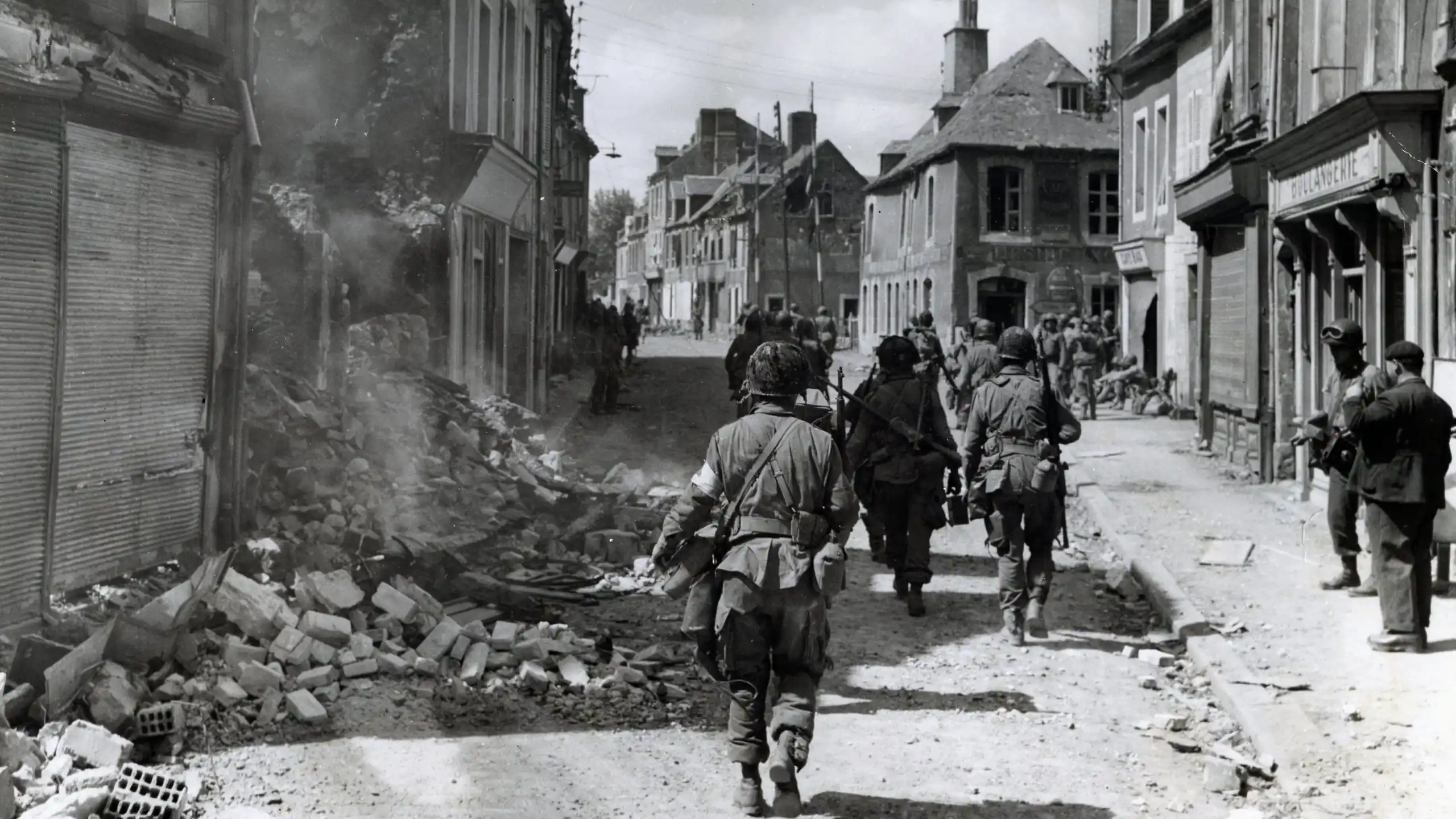
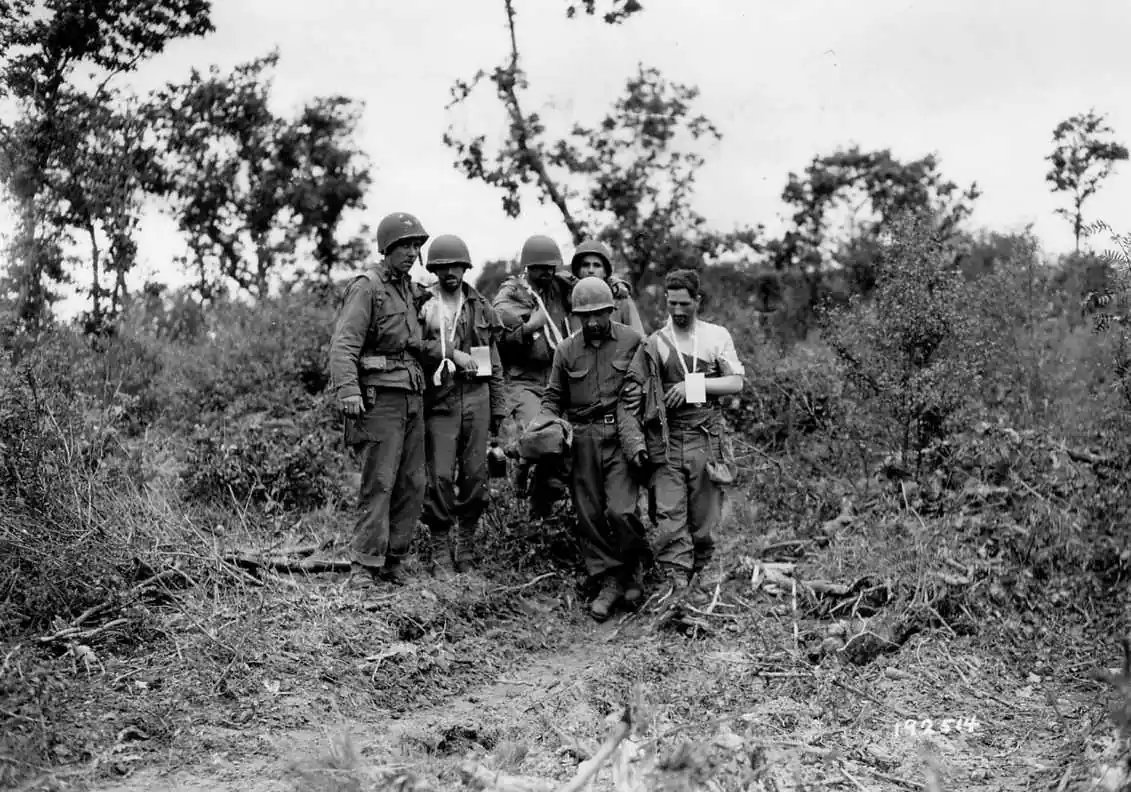
American troops in Carentan during the Battle of the Hedgerows - Photo US National Archives - Public Domain
From the bocage to the coast: destination Cherbourg
In the Allied strategy, capturing a deep-water port like Cherbourg was essential. Direct resupply of food, weapons, equipment, reinforcements, and medical support from the United States depended on it. The port and city of Cherbourg were only liberated on June 26th after difficult and grueling fighting. According to Allied forecasts, the American army should already have been in Brittany and Mayenne by the same date. However, it would still take several weeks before the port, sabotaged by the Germans and heavily bombed during the fighting, was repaired.
The capture of La Haye-du-Puits
Once the Cotentin Peninsula was cut off, the American troops shifted their advance northward to capture Cherbourg. But this respite on the initial front line allowed the Germans to reorganize, bring in reinforcements, and establish a solid defensive network, stretching from the coast through the marshland to the bocage of Saint-Lô.
In early July, the American army attempted to recapture the town of La Haye-du-Puits. This town, a major road junction, seemed impregnable, fortified as it was with mines, trenches, and barbed wire. The assault was launched on July 4th and lasted nearly a week. The Americans entered the town several times but were repelled each time after fierce fighting.
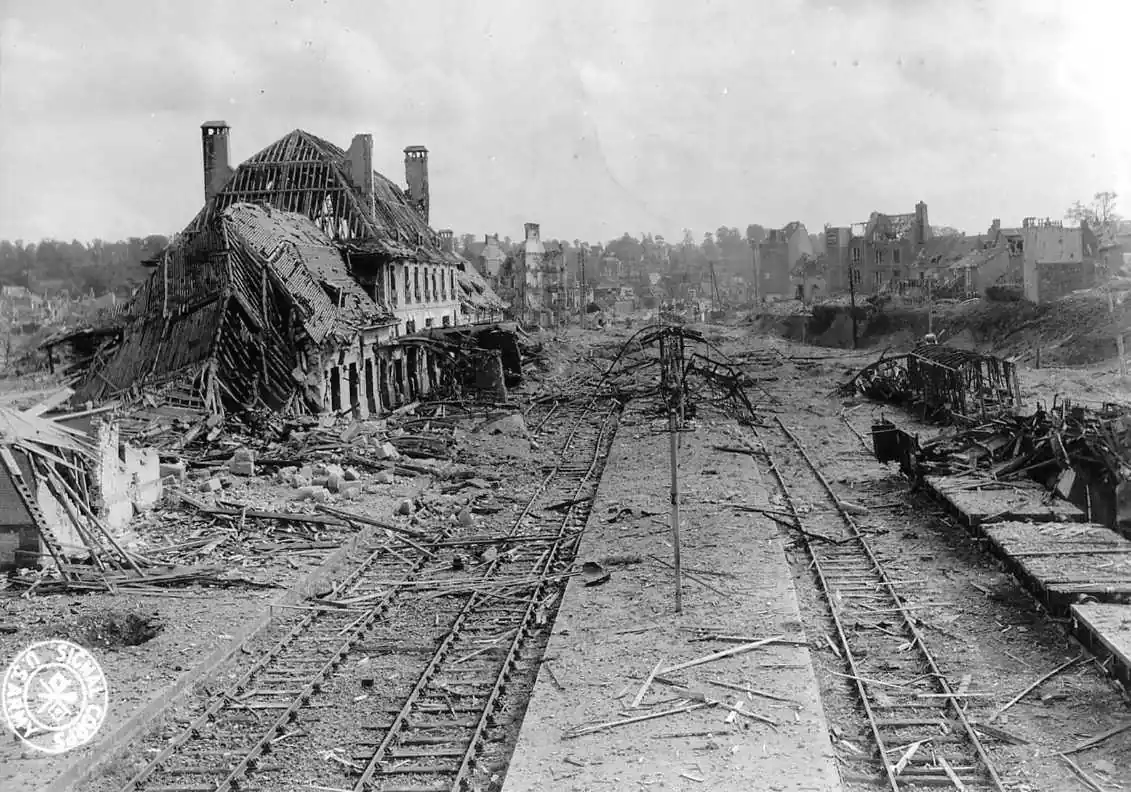
It was only after massive bombardments by American artillery and a joint advance of armored vehicles and infantry that the town fell to the Americans. On July 9, the town of La Haye-du-Puits was finally liberated, but in ruins.
To die for Saint-Lô
The capture of Saint-Lô was entrusted to the 19th Corps of the U.S. First Army, under the command of General Corlett. Aerial bombardments were launched on the city the day after D-Day. It was left for dead and resembled a field of ruins. Numerous civilian casualties were reported. Firmly entrenched on the city's high ground, the Germans were difficult to reach. Their units were well-prepared, drawn from the 3rd Parachute Division and an experienced infantry division.
This battle is, in a way, the symbol of the Battle of the Hedgerows, which had paralyzed the Americans since the beginning of July, in a Norman bocage they didn't know but which the enemy exploited to their advantage. On July 16 and 17, fierce fighting took place for the capture of Saint-Lô, leading to the gradual withdrawal of the German army on July 18.
It was not until July 25th that Saint-Lô was entirely in American hands, thus preventing German reinforcements from coming from Brittany to supply the front.
A month in the hell of the bocage
The “Norman Jungle”, the unpleasant surprise of the hedgerow battle
At the beginning of July 1944, with the Americans having captured Cherbourg, a new phase of the Battle of the Hedgerows began, moving from the Cotentin Peninsula towards the center of the Manche department. For three weeks, extremely deadly fighting raged. Heavy losses were suffered on both sides. The American troops faced the Norman bocage, an intricate network of sunken lanes and small fields bordered by dense hedgerows—a landscape so unexpected that it gave the battle its name: the Hedgerow War.
Unlike the Caen region, which is mainly composed of large plains, the Manche department is dominated by hedgerows, making troop advances and armored maneuvers even more difficult. On the other hand, it is ideal terrain for the defenders, who use every field and hedgerow as a rampart and inflict very heavy losses on the Americans.
The hedge cutter: the solution for escaping the hedgerows
In their strategies, the Americans did not pay sufficient attention to the bocage landscape, comparable to a jungle from a military perspective. Vehicles, and especially tanks, were poorly suited to the small fields enclosed by hedgerows and sunken lanes. To overcome these obstacles, armored support proved essential. Unfortunately, maneuvering was difficult for tanks due to the density of the hedgerows. Crossing them was therefore necessary, but as the tanks began their advance, they were forced to expose their almost unarmored underbelly to the enemy, making them ideal targets for German anti-tank weapons. Day after day, the charred wrecks of Sherman tanks accumulated in the bocage, which seemed increasingly impassable to the GIs.
To solve this problem, one man devised an ingenious system. Sergeant Curtis G. Culin developed the "hedge cutter." He first acquired "Czech hedgehogs," an assembly of steel beams placed by the Germans on the beaches to counter landing craft. He then detached these beams, welded them together, and added enormous teeth to create a kind of harrow capable of breaking through the hedge. Finally, he attached his ingenious system to the front of tanks so that they could now cross hedges not by going over them, but by driving through them. A large number of tanks were equipped with it by mid-July, shortly before the launch of Operation Cobra.

Sergeant Curtis G. Culin's hedge cutter - Photo US National Archives - Public Domain
Cobra and Lüttich, the two major offensives of the summer of 1944
"Operation Cobra" reignites the war of movement
By mid-July, it was clear that the American advance had bogged down in the Norman bocage and the Battle of the Hedgerows. Everywhere, the enemy offered fierce resistance, sometimes pinning down an American battalion with just a handful of men for an entire day. The General Staff, aware of this stalemate, decided to strike a decisive blow, launching an operation to revive the war of movement and break out of the bocage. On July 25, Eisenhower launched Operation Cobra. 1,500 bombers (B-17s and B-25s) dropped over 3,000 tons of bombs on an isolated sector of the front north of Saint-Lô. This intense bombing campaign aimed to breach the German lines in order to definitively break through the front and finally advance towards Brittany. Normandy would thus be entirely liberated.
After a hesitant start, Marigny, Saint-Gilles, and Canisy fell to the Americans. Operation Cobra was soon a success. Between July 28 and 30, the towns of Coutances, Granville, and Avranches were liberated; the American advance was lightning-fast. The German army, caught off guard, abandoned its positions and retreated. Delaying actions took place south of Coutances, allowing the Germans to save some of their best units, but at the cost of all their heavy equipment. Despite the heavy losses it incurred, Operation Cobra was a resounding success.
Lüttich: When the German army played its last card
Nothing now seemed capable of halting the advance of the American mechanized units. One figure alone embodied this enthusiasm and bold temperament: General Patton. As early as July 31st, he committed his armored divisions to the road to Brittany, passing through the Pontaubault narrows. However, this area around Avranches remained vulnerable, as the American forces were far from the main body of their troops. Hitler then attempted to exploit his last trump card in a daring counter-offensive. He assembled several armored units, primarily from the SS, and infantry, and then, on August 7, 1944, launched "Operation Lüttich." Its objective was to isolate the American First and Third Armies by cutting Patton off from his reserves with a large-scale armored offensive, from the Mortain region towards Avranches. This offensive initially overwhelmed the American troops but did not last, thanks in particular to the sending of several divisions as reinforcements and the support of the air force which wreaked havoc among the German armored vehicles.
The losses suffered by the German soldiers took their toll, and Allied air superiority brought the offensive to a definitive end. Hitler's audacious gamble had failed; the troops retreated, marking the beginning of the end for the Germans.
By August 15th, the sounds of battle had faded away in the English Channel. A week later, the Falaise Pocket closed, encircling tens of thousands of Reich soldiers and bringing the Battle of Normandy to an end. On August 25th, Paris was liberated, but it had taken two and a half months of fierce fighting in the Normandy bocage before this liberation could be celebrated!
The end of a deadly battle
The Allied military might finally overcame its adversary, but at the cost of immensely heavy losses. Compared to the initial forecasts, the Allied High Command had to acknowledge significant delays in achieving its original objectives. A series of errors, but above all the tenacity of the German resistance and its ability to exploit the Norman bocage, thwarted the plans of Eisenhower and his generals.
It was ultimately Operation Cobra that brought an end to the hedgerow battles, allowing the GIs to finally break out of the bocage and resume mobile warfare. All those weeks spent in the "hedgerow hell" nevertheless demonstrated the crucial role of air power, which supported ground troops and extricated them from perilous situations.
Artillery also played a vital role in bombarding German positions, while armored vehicles provided the support the troops needed.
As during the Great War, the true hero remained the foot soldier, the ordinary infantryman, facing the green hell day after day. The "Battle of the Hedgerows" was thus the first step in a larger undertaking: the total liberation of Europe.
To remember
- After the D-Day landings, the fighting in the Norman bocage became particularly deadly for both soldiers and civilians.
- Between La Haye-du-Puits and Lessay, some American units advanced at the cost of considerable losses. It was reported that one American soldier was killed for every meter gained.
- The fighting in the summer of 1944 caused the death of several thousand Norman civilians and destroyed many towns and villages.
- Operation Cobra, launched at the end of July 1944, allowed American troops to break through the German front and gradually emerge from the Norman bocage.
Extend your exploration:
→ Operation Cobra (an article from the magazine)